
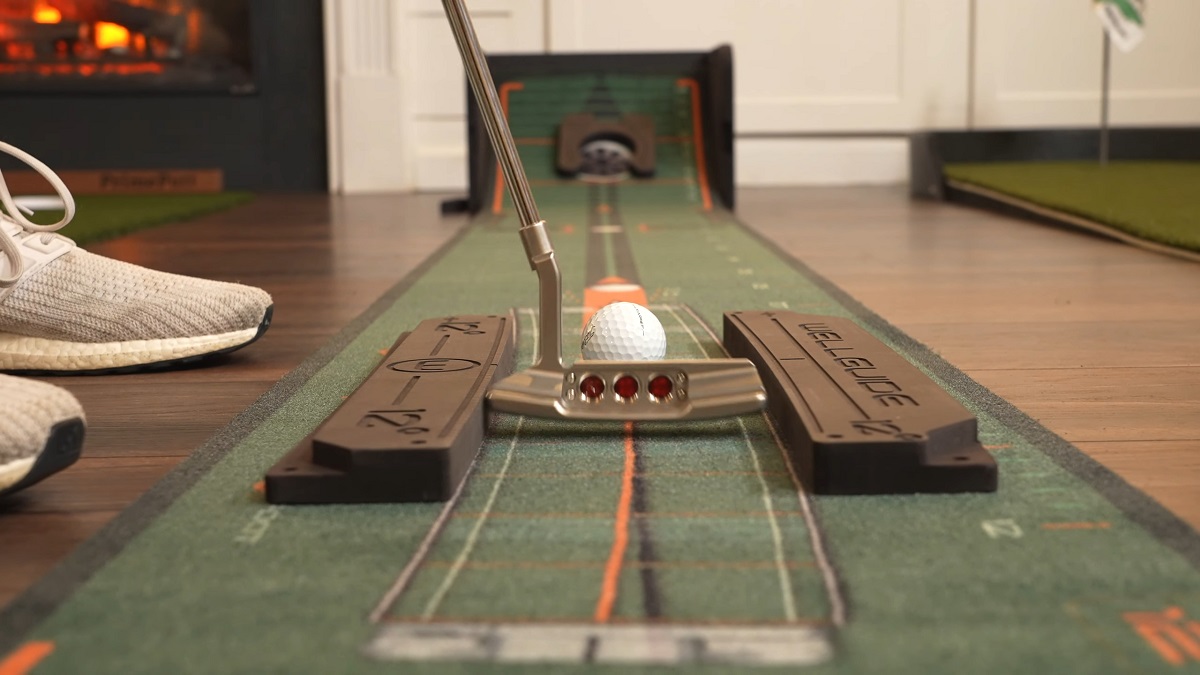
Golfers now look to home setups as a serious way to sharpen skills year-round.
At-home golf training has surged, offering players a chance to practice consistently without heading to the course.
Consistency, precise feedback, and purposeful repetition are the keys to skill retention and progress.
For gear selection, the essentials are compact designs, feedback clarity, and the ability to target multiple skill areas at once.
1. Indoor Putting Green & Cups
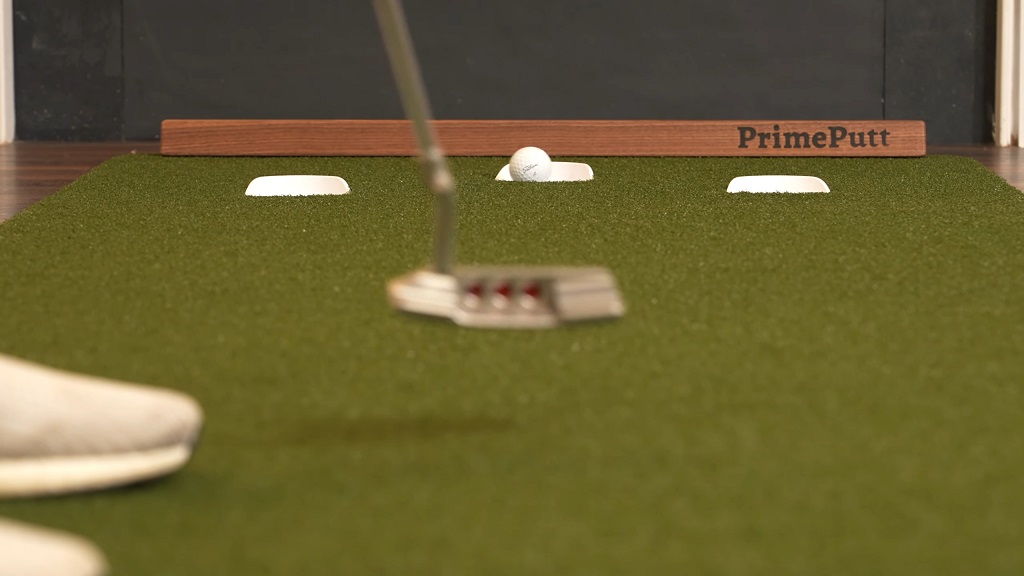
Practicing putts at home builds habits that translate directly to lower scores on the course.
Putting greens simulate roll and pace, giving players the ability to fine-tune stroke mechanics, visualize lines, and build muscle memory.
Daily repetitions on a home green reinforce setup posture, confidence, and distance control. Even a few minutes a day help maintain touch and eliminate those frustrating three-putts.
Variants to consider:
- PrimePutt replicates real grass texture and promotes a realistic roll, great for consistency training.
- AirBreak/Breaking Ball Mats introduce simulated breaks, challenging users to read and adjust to sloping conditions.
- Pelz Putting Cup offers a small target area to improve aim and distance precision, making real holes seem larger by comparison.
Benefits:
- Boosts pace control and alignment
- Encourages confident, repeatable strokes
- Makes green reading skills easier to retain
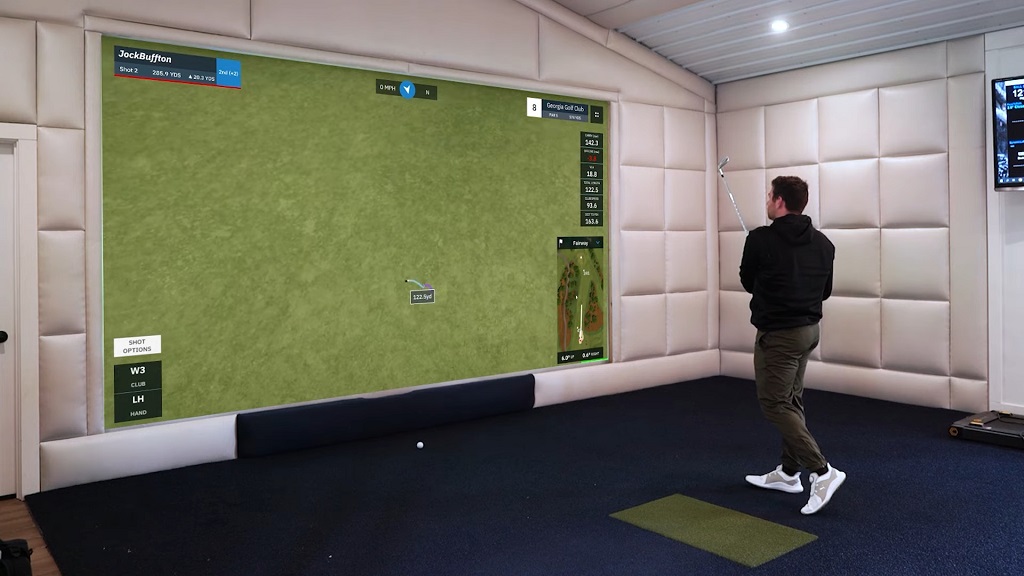
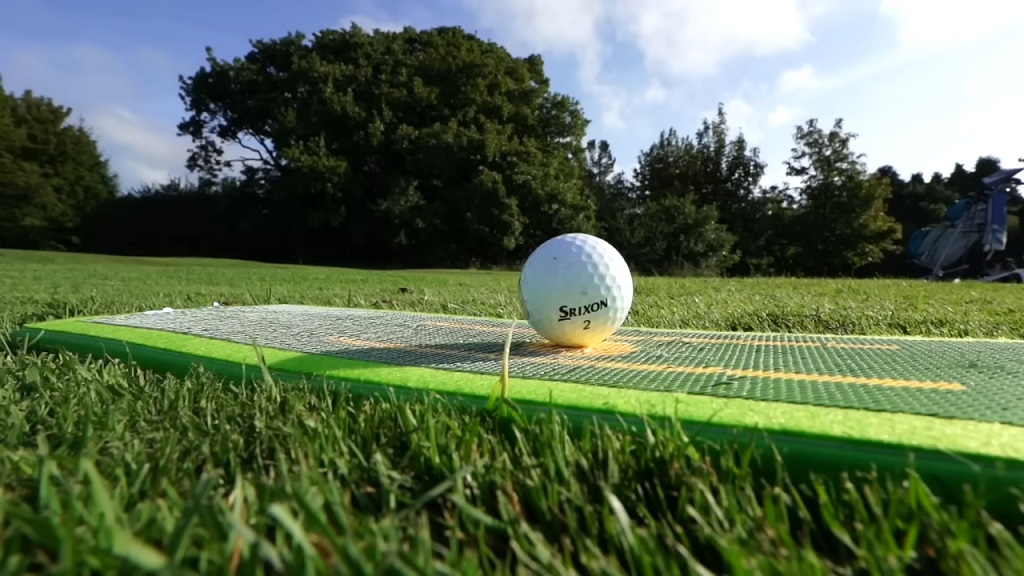
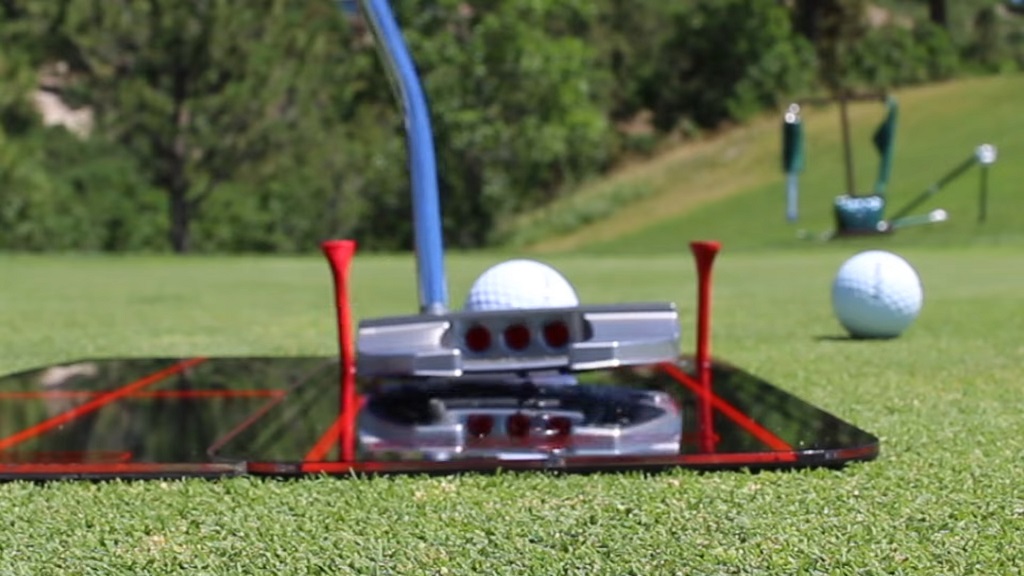
Data-driven improvement leads to smarter practice. Golf simulators for home combine entertainment and analytics to turn garages and spare rooms into elite-level training zones. Launch monitors provide real-time feedback on club path, ball speed, face angle, spin, and distance. Practicing with launch monitors transforms drills into purposeful sessions. Combined with simulated courses, they make long-term improvement enjoyable and trackable. Powerful, accurate swings depend on timing. Swing tempo trainers help develop the fluid rhythm needed to generate clubhead speed and maintain balance. Lag aids train users to delay wrist release, building the snap that separates great ball strikers from inconsistent ones. Using these trainers helps internalize feel without overthinking mechanics. Great for warming up or daily drills, these tools condition muscle patterns that carry straight to the tee. Clean contact transforms an average swing into a scoring weapon. Players seeking to strike it pure every time need feedback on face position, swing path, and turf interaction. That’s where impact trainers shine. Tools like divot boards and strike trainers reveal where the club contacts the ground relative to the ball. Immediate feedback lets players make micro-adjustments with every swing. Distance gains don’t come from guessing. Speed training builds measurable results by targeting swing velocity directly. Faster clubhead speed creates longer drives and shorter approach shots, which leads to better scoring chances. Using structured training regimens, players can work on speed just like a strength athlete targets power output. Tools in this category offer progressive loading, tempo drills, and guided routines that safely increase speed over time. Comparison: Many missed putts start before the stroke begins. Setup flaws in alignment, posture, and face angle often go unnoticed. Stroke aids train repeatable setups and smooth motion by giving immediate visual and tactile feedback. Using mirrors and guides reinforces proper shoulder tilt, eye placement, and stroke arc. Practicing with these tools reduces variation and increases consistency under pressure. Grip and setup create the foundation for every swing. Errors here ripple through the motion and ruin consistency. Grip trainers and setup connectors train body coordination and correct hand positioning without needing a coach. These tools allow users to self-correct and repeat fundamentals until they become natural. Consistency improves when grip pressure, hand placement, and shoulder alignment remain steady. Putting aids, swing speed systems, feedback tools, and setup trainers all serve different but important roles. Each category addresses core components of improvement like: Select gear based on space, goals, and skill gaps. For best results, combine two or three tools that focus on different parts of the game to create a balanced indoor practice routine.2. Home Simulator & Launch Monitors
Bonus Features:
Popular Tools:
3. Swing Tempo & Lag Trainers
Highlights:
4. Impact & Ball Striking Tools
Features:
Benefits:
5. Speed Trainers
6. Putting Alignment & Stroke Aids
Benefits:
Popular Tools:
7. Grip & Setup Trainers
Devices:
Summary